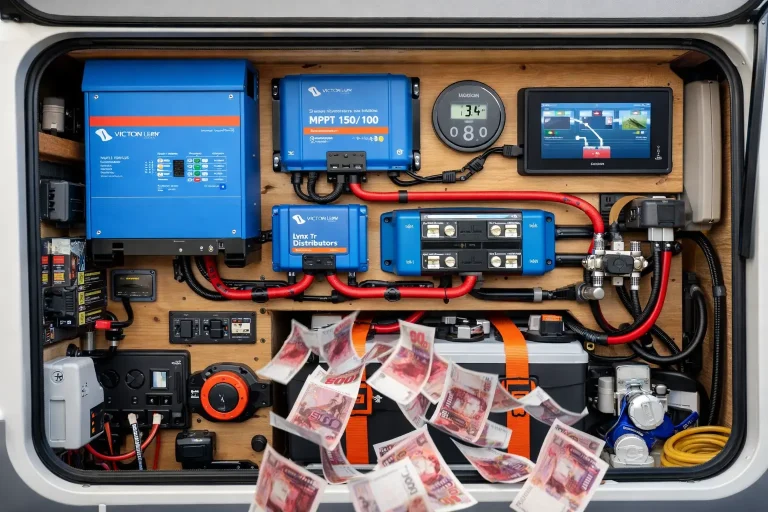
Are Campervan Electrical Systems Getting Too Complicated?
Campervan electrical systems have evolved rapidly in recent years. However, many owners now question whether modern setups have become too complex.
What started as a simple way to travel freely has turned into something far more technical. Today, many campervans resemble mobile power stations rather than minimalist escape vehicles.
So the real question is: are we overengineering campervan electrics?
The Rise of Complex Campervan Electrical Systems
Traditionally, campervan life focused on simplicity. You packed what you needed, left the rest behind, and embraced a more independent lifestyle.
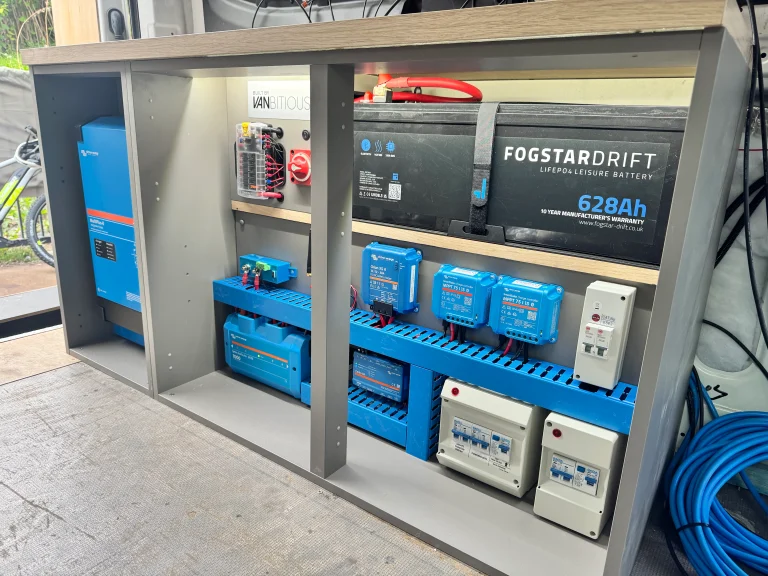
However, modern builds often include:
- Large lithium battery systems
- Solar panel arrays covering entire roofs
- Inverters and DC-DC chargers
- Shore power connections
- Smart monitoring systems
As a result, many vans now support high-demand appliances such as coffee machines, air fryers, and even air conditioning.
While this sounds convenient, it also changes the original purpose of van life.
Are Campervan Power Setups Becoming Overkill?
In many cases, yes.
Adding more electrical components increases:
- Weight
- Cost
- Installation complexity
- Maintenance requirements
In addition, every new system introduces another potential failure point.
Instead of a reliable, go-anywhere vehicle, you may end up with a system that requires constant monitoring and management.
From Freedom to Complexity: What Changed?
Campervans once represented freedom through simplicity. Now, many setups try to replicate a home environment.
For example, instead of adapting to life on the road, some owners attempt to bring:
- Full kitchen appliances
- High-powered electronics
- Always-on electrical systems
As a result, the focus shifts from exploration to system management.
The Hidden Downsides of Overbuilt Campervan Electrics
Overcomplicated systems don’t just add hardware—they also introduce mental strain.
The more advanced your setup becomes, the more you start to think about:
- Battery levels
- Solar performance
- Power consumption
- System efficiency
Consequently, this can lead to what many call “van life optimisation anxiety.”
Instead of enjoying the journey, you end up managing your system.
Do You Really Need a Large Lithium Battery System?
Lithium batteries have transformed campervan electrics. They offer:
- Faster charging
- Longer lifespan
- Higher usable capacity
However, not every user needs a large system.
If your setup only powers:
- Lights
- Charging ports
- A fridge
Then a simpler system may be more practical and cost-effective.
Finding the Right Balance in Campervan Electrical Design
This doesn’t mean electrical systems are unnecessary. In fact, a well-designed setup improves comfort and usability.
The key is balance.
A good campervan electrical system should:
- Support your essential needs
- Remain simple and reliable
- Avoid unnecessary complexity
In other words, it should enable your journey—not control it.
Simple vs Complex Campervan Setups: Which Is Better?
The answer depends on how you travel.
- Weekend users often benefit from simple systems
- Full-time travellers may require more advanced setups
However, even full-time users should avoid overengineering.
Because ultimately, complexity reduces reliability.
Final Thoughts: Keep Campervan Electrics Simple
Campervan life is about mobility, independence, and simplicity.
While modern electrical systems offer impressive capabilities, adding too much can work against you.
If your setup requires constant monitoring or feels overly complicated, it may be time to simplify.
After all, the goal isn’t to build a mobile power station—it’s to enjoy the freedom of the road.