Motorhome Electrical Systems: Are You Wasting Thousands on Power You Don’t Need?
There’s a quiet absurdity in many modern setups. You can spend thousands on motorhome electrical systems—solar panels, lithium batteries, and inverters—only to charge a phone and run a fridge for a weekend in Cornwall.
So the question is simple: are motorhome electrical systems becoming overkill?
The Rise of Complex Motorhome Electrical Systems
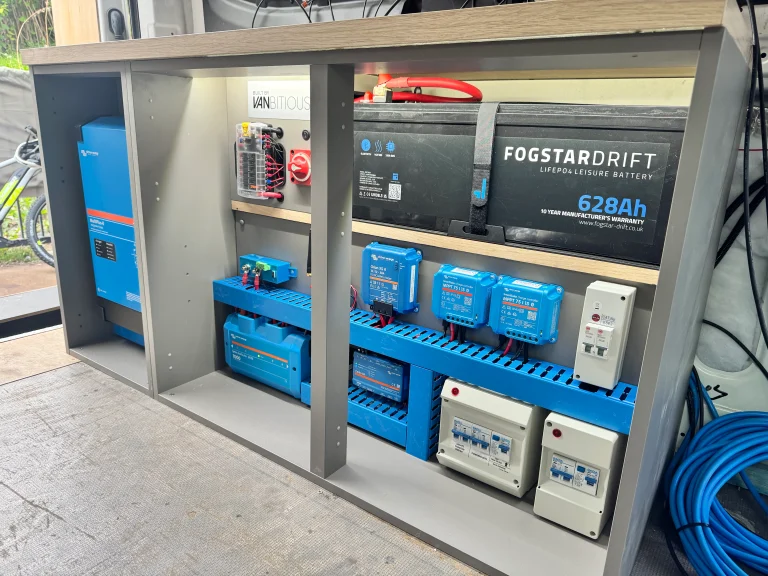
Modern motorhome electrical systems combine multiple power sources into one setup. Typically, these include:
- Mains hook-up
- Leisure batteries
- Solar panels
- Inverters
As a result, many motorhomes now operate like small, mobile power stations.
Most systems run on two types of power:
- 12V DC for lights, pumps, and USB charging
- 230V AC for appliances like kettles or microwaves
To achieve this, owners often install:
- Multiple leisure batteries
- Solar charge controllers
- Inverters for mains power
- Battery monitoring systems
While this looks impressive, it often goes far beyond what most people actually use.
Why Motorhome Electrical Systems Become So Expensive
Costs can quickly spiral.
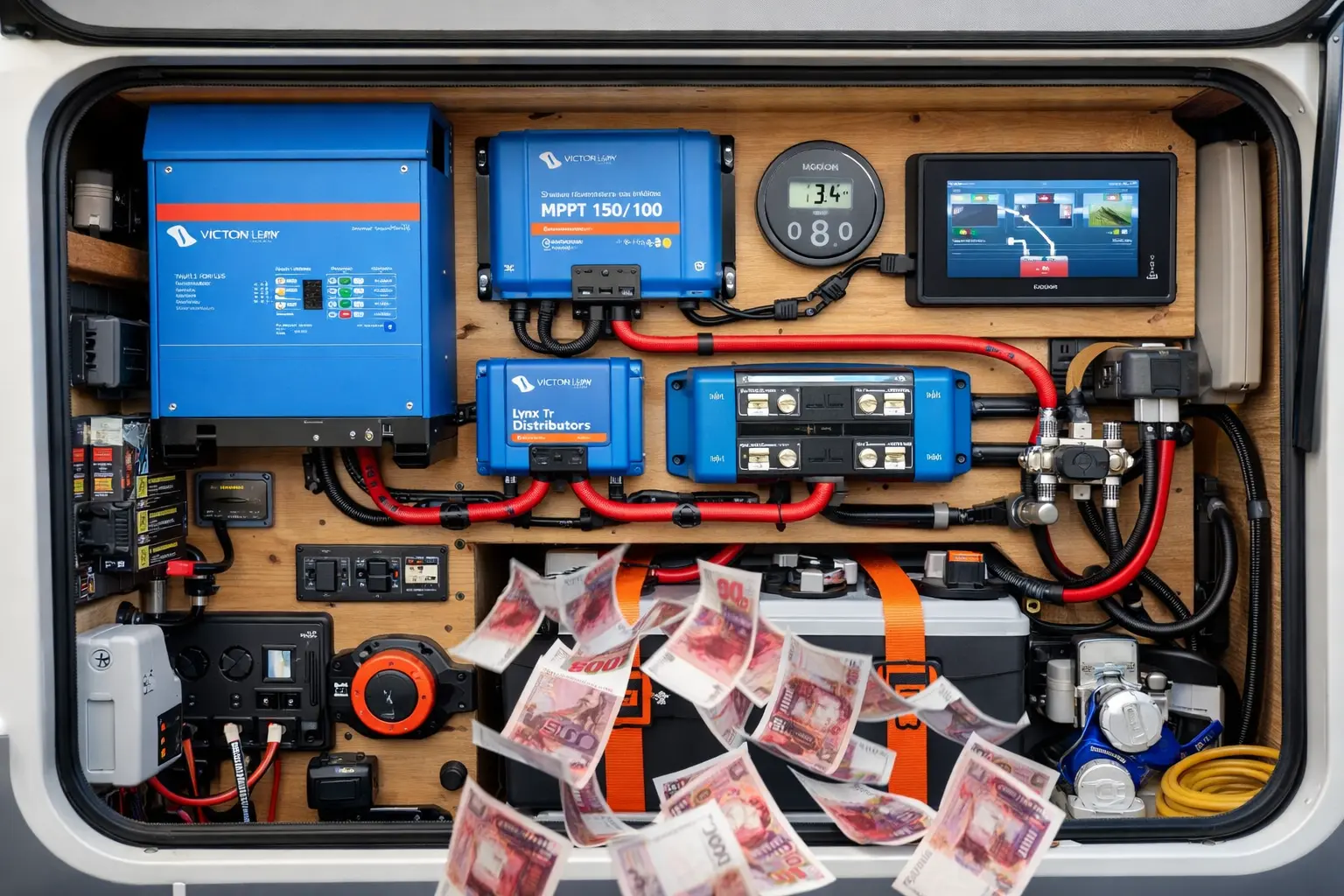
A basic setup might cost £1,000. However, more advanced motorhome electrical systems often reach £2,000–£4,000 or more.
This happens because of “what if” thinking:
- What if I need to run a laptop? → bigger battery
- What if I go off-grid for a week? → add solar
- What if I want a kettle? → install an inverter
As a result, you design a system for rare scenarios instead of everyday trips.
What Do Most Motorhome Owners Actually Use?
In reality, most trips are simple.
Typically, people use motorhome electrical systems for:
- Charging phones
- Running LED lights
- Keeping a fridge cool
- Powering a water pump
However, a basic 12V leisure battery system already handles all of this.
In addition, many fridges run on gas when parked, which significantly reduces electrical demand.
Simple vs Complex Motorhome Electrical Systems
There is a clear gap between capability and real usage.
Advanced Systems Offer:
- Long off-grid power
- 230V appliance use
- Detailed energy monitoring
However, in Practice:
- Most trips are short
- Campsites provide hook-ups
- High-power appliances drain batteries quickly
Therefore, many advanced systems remain underused.
The Hidden Problem with Overbuilt Systems
Adding more components creates new challenges.
For example:
- Increased weight affects fuel efficiency
- More wiring increases failure points
- Complex systems require ongoing monitoring
As a result, your motorhome becomes less reliable, not more.
The Psychological Trap Behind Overengineering
The real issue isn’t technical—it’s psychological.
Many buyers think:
- What if I go off-grid for two weeks?
- What if I need to work remotely?
- What if I want home comforts?
However, most trips are:
- Short breaks
- Campsite-based
- Focused on being outdoors
Because of this, many systems are built for rare situations instead of real usage.
A Simpler Motorhome Electrical Setup
For many users, a simple system works better.
A typical setup includes:
- One leisure battery
- Split-charge relay (charges while driving)
- Basic 12V system for lights and USB
This setup:
- Costs far less
- Works reliably
- Requires minimal maintenance
In other words, it does exactly what most travellers need.
When Advanced Motorhome Electrical Systems Make Sense
To be fair, complex systems are useful in certain situations.
For example, if you:
- Live full-time in a motorhome
- Work remotely
- Travel off-grid for long periods
- Use high-power appliances regularly
In these cases, the investment makes sense.
However, for occasional users, it often doesn’t.
Final Thoughts: Do You Really Need That Much Power?
Motorhome electrical systems have become more powerful—but also more complex and expensive.
So before upgrading, ask yourself:
👉 What do I actually need to power?
If the answer is just a phone, lights, and a fridge, then a £3,000 system isn’t essential—it’s overengineering.
Sometimes, the smartest upgrade isn’t adding more.
It’s keeping things simple.